








Ever feel like you’re stuck in someone else’s skin, just waiting to burst free and show the world who you really are?
You’re not alone. The journey to finding your true self as a trans woman can be a rollercoaster, packed with uncertainty, hope, and a burning eagerness to finally feel like you.
It’s a wild ride, and it’s okay to feel all the feels – the doubt, the anticipation, the excitement.
Maybe you’re thinking, “Is it really possible to embrace who I am and feel genuinely confident?” Absolutely, it is.
Listen, it’s perfectly normal to have those nagging questions, to wonder if you’ll ever look in the mirror and see the real you staring back.
You’re here because you want more than just surviving – you want to thrive, to step into your truth with confidence and authenticity. And guess what? You’re already on the right path.
In this post, we’re diving deep into the gender spectrum, breaking it down piece by piece, so you can start piecing together your true self.
It’s not just about understanding – it’s about feeling, expressing, and owning who you are.
Ready to embrace your journey? Let’s begin.
Section 1: Understanding the Genderbread Person
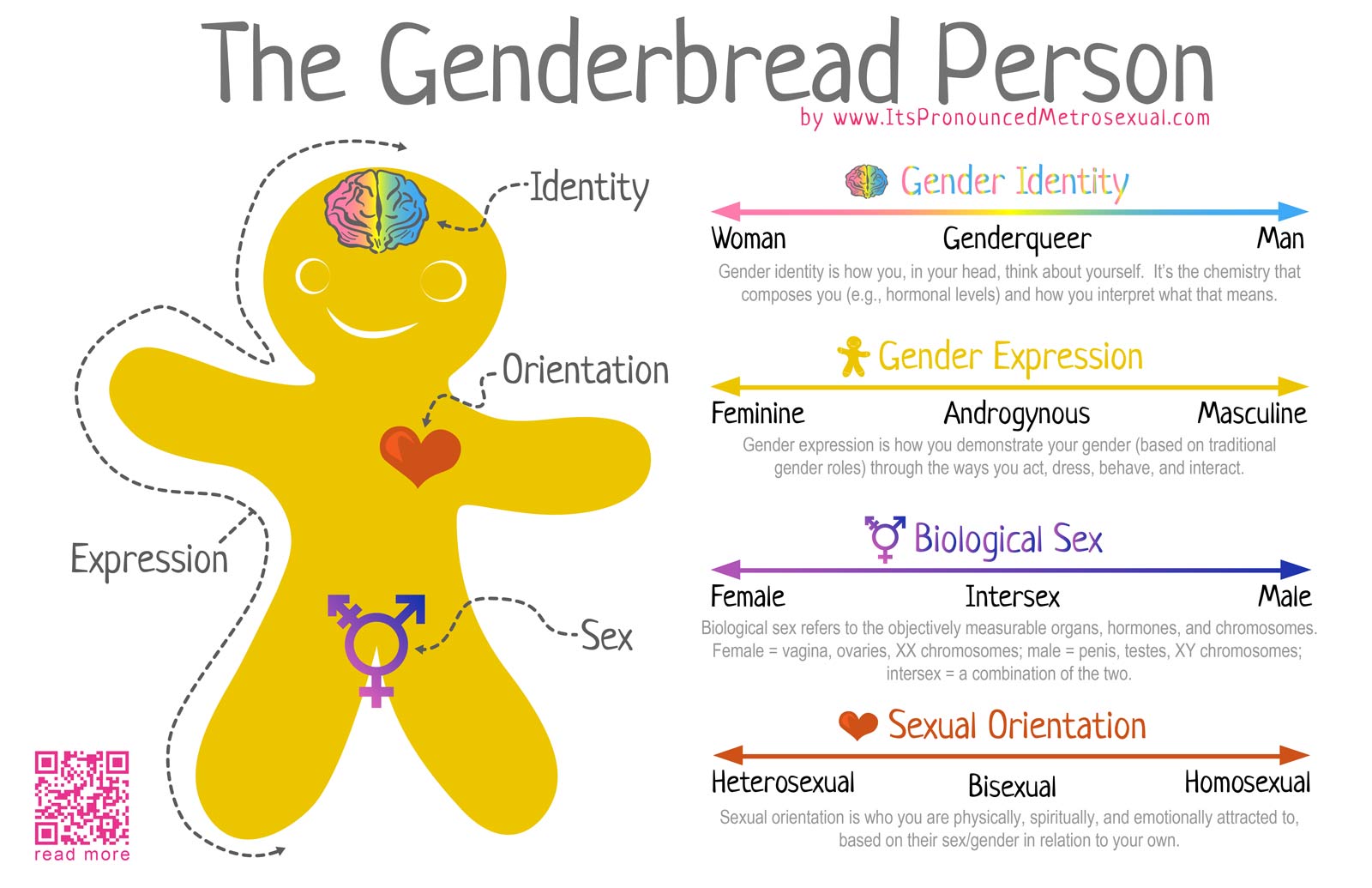
The Genderbread Person is your new best friend.
It’s a simple yet powerful tool to help you understand the complexities of gender. Think of it as a roadmap to navigate the confusing world of gender identity, expression, biological sex, and sexual orientation.
Imagine you’re trying to find a treasure. You wouldn’t start without a map, right? The Genderbread Person is that map. It breaks down gender into manageable pieces, making it easier to understand and relate to.
You might be feeling overwhelmed, wondering how to even begin. That’s okay. Let’s start by looking at the Genderbread Person together. It’s like a gingerbread man, but instead of sugar and spice, it’s filled with knowledge and insight.
You see, gender isn’t just one thing. It’s a combination of different elements, all interacting with each other. The Genderbread Person helps you see how these elements fit together.
It’s not about fitting into a box; it’s about understanding the different parts of yourself.
Take a moment to reflect on this. Maybe you’ve always felt that there’s more to your gender than what you’ve been told. This tool will help you put those feelings into words and concepts you can grasp.
Steps to Understanding the Genderbread Person:
1. Review the Diagram:
- Look at the Genderbread Person diagram.
- Note the different sections: gender identity, gender expression, biological sex, and sexual orientation.
2. Read Descriptions:
- Read through the descriptions of each section.
- Understand how they relate to each other and to your own experiences.
3. Reflect on Your Experiences:
- Think about moments when you felt most like yourself.
- Consider how these moments fit into the categories described by the Genderbread Person.
4. Journal Your Thoughts:
- Write down your reflections.
- Note any insights or questions that come up as you explore the diagram.
Using the Genderbread Person isn’t about putting yourself into rigid categories. It’s about finding a language and framework that helps you better understand and articulate your own experiences and identity.
Take your time with this. Reflect on what you’ve learned and how it resonates with your own journey.
This is just the beginning, and there’s so much more to discover.
Section 2: Gender Identity – Who You Think You Are

Gender identity is the core of who you are. It’s what you feel deep inside, the part of you that knows who you truly are.
This might be the most personal and profound aspect of your journey. It’s who you are when no one else is watching. It’s your inner sense of being male, female, both, neither, or somewhere in between.
Let’s break it down. Imagine you’re peeling an onion. Each layer you peel away brings you closer to the core. Gender identity is that core.
It’s not about how others see you; it’s about how you see yourself.
You might be thinking, “But how do I know for sure?” That’s a fair question. It’s not always clear-cut, and that’s perfectly fine. Reflect on moments when you felt most like yourself.
Steps to Explore Your Gender Identity:
1. Journal Your Feelings:
- Write about times when you felt most authentic.
- Consider what you were doing, wearing, and how you were interacting with others.
2. Identify Patterns:
- Look for patterns in your journal entries.
- Note any recurring themes or feelings that stand out.
3. Explore Different Identities:
- Read about various gender identities.
- Watch videos or listen to podcasts from people who identify in diverse ways.
4. Reflect on Your Own Identity:
- Consider how different identities resonate with you.
- Think about which aspects of these identities feel right or wrong for you.
5. Discuss with Supportive People:
- Share your thoughts with a trusted friend, therapist, or support group.
- Get feedback and support as you explore your identity.
Gender identity can be fluid and change over time. What feels right today might evolve as you continue your journey.
It’s okay to be uncertain or to not have all the answers immediately. This exploration is a significant part of understanding and embracing who you truly are.
Take your time. Reflect on your discoveries. This is your journey, and every step brings you closer to your true self.
Section 3: Gender Expression – How You Demonstrate Who You Are

Now, let’s talk about gender expression. This is all about how you show your gender to the world.
It’s the clothes you wear, the way you style your hair, the way you move and speak. It’s the external manifestation of your internal identity. If gender identity is the feeling, gender expression is the showing.
Think of it like decorating a room. The way you decorate reflects your personality. In the same way, your gender expression reflects your gender identity.
Maybe you’re wondering, “How do I express my true self?” Start small. Experiment with different styles, colors, and looks. See what feels right.
It’s about trial and error. Maybe wearing a certain outfit makes you feel more authentic. Or maybe trying a new hairstyle gives you a boost of confidence.
Steps to Explore Your Gender Expression:
1. Experiment with Clothing:
- Try on different styles and see what makes you feel most like yourself.
- Consider shopping in different sections of stores to find what fits your expression.
2. Play with Hairstyles:
- Change your hairstyle to see how it affects your appearance and how you feel.
- Use wigs or temporary styles if you’re not ready for a permanent change.
3. Use Makeup:
- Experiment with makeup to enhance your features or try new looks.
- Watch tutorials online for tips and inspiration.
4. Adjust Your Mannerisms:
- Pay attention to how you move and speak.
- Practice different ways of walking, gesturing, and talking that feel authentic to you.
5. Reflect on Your Comfort Levels:
- Notice what feels right and what doesn’t.
- Keep track of your feelings in a journal to identify what expressions align with your true self.
Gender expression is fluid. What feels right today might change tomorrow.
And that’s okay. You’re not locked into one way of expressing yourself. It’s a journey, not a destination.
Take your time exploring different expressions. This is about finding what makes you feel most authentic and comfortable. Every experiment, every change, is a step closer to embracing your true self.
Section 4: Biological Sex

Biological sex is often what people think of first when they hear the word “gender,” but it’s just one piece of the puzzle.
It’s the physical traits you’re born with or develop, like chromosomes, hormones, and reproductive organs.
Imagine a car. The engine is crucial, but it doesn’t define the whole vehicle. In the same way, biological sex is important, but it doesn’t define who you are.
You might be thinking, “Do I have to fit into a specific category?” No, you don’t.
Biological sex exists on a spectrum, just like gender.
There are intersex individuals who don’t fit neatly into the male or female categories. Understanding this can be liberating. It means there’s no right or wrong way to be.
Steps to Understand Biological Sex:
1. Learn the Basics:
- Read about chromosomes, hormones, and reproductive organs.
- Understand how these biological traits are commonly categorized.
2. Explore the Spectrum:
- Learn about intersex variations and how they challenge binary thinking.
- Recognize that biological sex is more complex than just male or female.
3. Reflect on Your Own Body:
- Consider how your biological traits have influenced your gender journey.
- Acknowledge any feelings or thoughts you have about your body.
4. Separate Biological Sex from Gender Identity:
- Understand that your biological sex doesn’t determine your gender identity.
- Reflect on how your identity might differ from societal expectations based on your biological sex.
5. Journal Your Thoughts:
- Write about your reflections on biological sex and how it relates to your experience.
- Note any new insights or questions that arise during this exploration.
By understanding biological sex as just one aspect of your identity, you can better appreciate the complexity of your gender.
It’s not about fitting into predefined categories. It’s about recognizing and embracing the uniqueness of your experience.
This knowledge can help you feel more comfortable and confident in your own skin. Remember, your body is just one part of your beautiful, multifaceted self.
Section 5: Sexual Orientation – Who You Are Attracted To

Sexual orientation is who you’re attracted to. It’s separate from gender identity and expression, but it’s another important piece of your self-understanding.
You might be drawn to men, women, both, neither, or somewhere in between.
Think of it like the icing on the cake. It’s an essential part, but it doesn’t change the cake itself.
Maybe you’re questioning, “How do I figure out my sexual orientation?” It’s about paying attention to your feelings and attractions. Who catches your eye? Who makes your heart race? These feelings are natural and valid.
Steps to Explore Your Sexual Orientation:
1. Reflect on Past Attractions:
- Think about people you’ve been attracted to in the past.
- Consider what it was about them that drew you in.
2. Notice Current Feelings:
- Pay attention to who you’re currently attracted to.
- Reflect on what qualities or characteristics you find appealing.
3. Explore Different Orientations:
- Read about various sexual orientations to see which ones resonate with you.
- Understand that sexual orientation can be fluid and might change over time.
4. Journal Your Experiences:
- Write about your attractions and feelings.
- Document any patterns or insights you notice.
5. Discuss with Trusted Individuals:
- Talk about your thoughts with a trusted friend, therapist, or support group.
- Gain perspective and support from others who understand.
Sexual orientation is a personal and unique part of who you are. It doesn’t need to fit into a specific label if that doesn’t feel right for you.
This exploration is about understanding and accepting your attractions, whatever they may be.
Take your time to reflect on your feelings. This is your journey, and there’s no rush to find all the answers immediately.
Understanding your sexual orientation is another step toward embracing your true self. Enjoy the process and be kind to yourself as you discover more about who you are.
Section 6: Integration and Reflection
By now, you’ve explored the different aspects of the gender spectrum. It’s time to integrate these insights and reflect on what you’ve learned.
Think of this as putting together a puzzle. Each piece represents a part of your identity. When you put them together, you get a clearer picture of your true self.
Reflect on your journey so far. What have you discovered about your gender identity, expression, biological sex, and sexual orientation?
Write down your thoughts and insights. Maybe you’ve had some “aha” moments. Or maybe you’re still piecing things together. Either way, you’re making progress.
Steps to Integrate and Reflect:
1. Review Your Notes and Journals:
- Go through your notes and journal entries from the past five days.
- Highlight key insights and recurring themes.
2. Create a Visual Representation:
- Make a mind map, drawing, or collage that connects the different aspects of your identity.
- Use colors, symbols, or images to represent different parts of your gender spectrum journey.
3. Identify Connections:
- Look for connections between your gender identity, expression, biological sex, and sexual orientation.
- Reflect on how these aspects interact and influence each other.
4. Summarize Your Discoveries:
- Write a summary of what you’ve learned about yourself.
- Include key insights, feelings, and any new understanding of your identity.
5. Reflect on Your Progress:
- Think about how far you’ve come in your journey.
- Acknowledge the effort and courage it took to explore these aspects of yourself.
Integration is about bringing all these pieces together to form a cohesive understanding of your identity.
It’s okay if some parts still feel uncertain or if new questions arise. This process is ongoing, and each step brings you closer to self-discovery.
Take time to appreciate your journey. Reflecting on your progress helps you see how much you’ve grown and how much closer you are to embracing your true self.
You’ve done incredible work. Celebrate your insights and look forward to continuing this journey with a deeper understanding of who you are.
Section 7: Piecing It Together
Now it’s time to piece everything together. Take a step back and look at the bigger picture.
You’ve explored the gender spectrum and gained a deeper understanding of yourself. This is about celebrating your journey and embracing your true self.
Review your notes, journal entries, and reflections. Write a personal manifesto or letter to yourself. Summarize your journey and what you’ve learned about your true self. This is your story. Own it.
Steps to Piece It Together:
1. Review Your Journey:
- Go through all your notes and reflections from the past week.
- Highlight the most significant insights and breakthroughs.
2. Write a Personal Manifesto:
- Summarize your journey in a manifesto or letter to yourself.
- Include key lessons, affirmations, and declarations of your true self.
3. Create a Vision Board:
- Make a vision board that represents your journey and future aspirations.
- Use images, words, and symbols that resonate with your true identity.
4. Celebrate Your Progress:
- Reflect on how far you’ve come and the effort you’ve put into this journey.
- Treat yourself to something special as a celebration of your progress.
5. Set Intentions for the Future:
- Write down your intentions for continuing your journey of self-discovery.
- Include specific actions you plan to take to embrace and express your true self.
Piecing it together is about bringing all your insights and discoveries into a coherent understanding of who you are.
It’s about recognizing and celebrating your progress, and setting intentions for the future.
Embrace Your Authentic Self: The Journey Continues
You’ve come a long way, and that’s something to be proud of. If you’re feeling a mix of relief, excitement, and maybe a bit of anxiety, that’s completely normal.
You might be thinking, “Is this really me? Can I truly embrace this identity?” Those feelings are valid and a natural part of this journey.
Remember, this week was all about breaking down the gender spectrum and understanding each layer of who you are.
We started with the Genderbread Person, a tool to help you see the big picture. Then, we delved into your gender identity, expression, biological sex, and sexual orientation. Each day brought you closer to the heart of your authentic self.
It’s okay to still have questions. This isn’t a sprint; it’s a marathon. Take a moment to reflect on how much you’ve learned and grown. You’ve gained tools and insights to help you navigate your identity with confidence and authenticity.
Think about the moments that resonated with you most. Maybe it was experimenting with gender expression or finally putting words to feelings you’ve had for years. Those moments are stepping stones on your path to self-discovery.
You have the power to define who you are. You’ve started a journey that’s about more than just understanding – it’s about living your truth every day. Remember the benefits of this exploration: the joy of seeing yourself clearly, the confidence that comes with authenticity, and the peace of knowing you are exactly who you’re meant to be.
So, stand tall and embrace your journey with all the courage you’ve shown this far. You’ve got the knowledge, the tools, and the heart to continue discovering and expressing your true self. This is your story, and it’s just beginning.
You’ve done an incredible job. Keep pushing forward, keep exploring, and keep being unapologetically you. The world is ready to meet the real you. Stand up, be proud, and let your authentic self shine. You’ve got this.