







Unveiling the True Layers of Gender:
It’s More Than Just Male or Female!
Understanding Gender
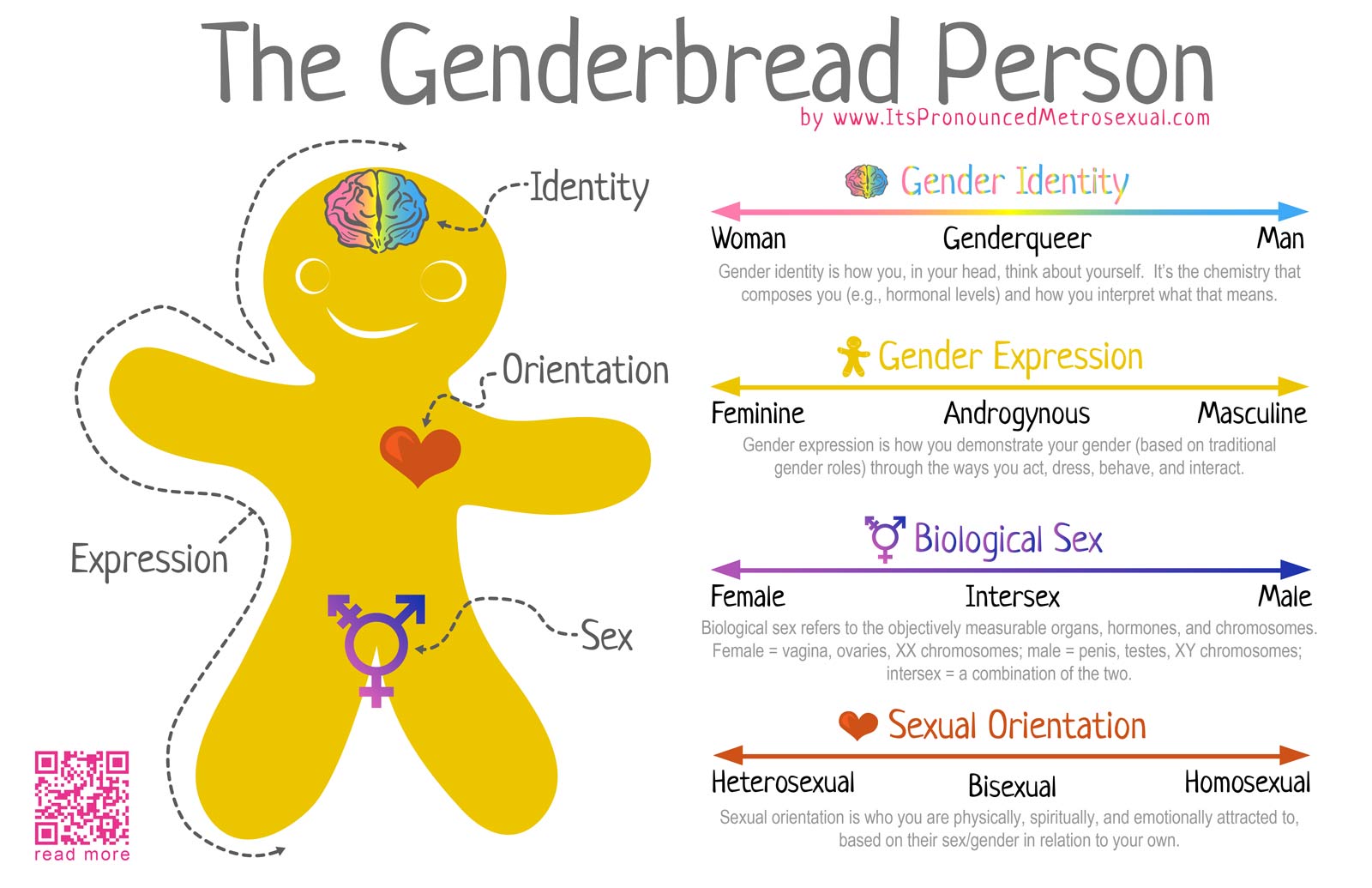
“The Genderbread Person is an engaging and user-friendly model developed from the insights of thousands of people over many years, designed to help us better comprehend the complex nature of gender as a social construct.“
– Sam Killermann (https://www.itspronouncedmetrosexual.com/)
Navigating the world of gender can feel like a puzzle, especially with all the outside noise and preconceived ideas we’ve grown up with.
But guess what?
We’ve got a fun and insightful guide to help: The Genderbread Person!
Come along, and let’s gently unravel this together.
A quick heart-to-heart: many of us think we need to pick a side when it comes to these gender aspects.
But in reality, that’s not how it works!
Here’s a little revelation: gender identity, gender expression, biological sex, and sexual orientation are all separate from each other.
If it feels a bit overwhelming and confusing now, that’s okay. We’ll chat about it again as we go along.
Ready to dive in?
Gender Identity – Who You Think You Are
Let’s talk about some familiar terms.
Picture this: ‘woman’ on one side, ‘man’ on the other, with ‘genderqueer’ comfortably nestled in between.
As you can imagine, ‘genderqueer’ captures those feelings that aren’t strictly ‘woman’ or ‘man’.

And hey, there are so many of us who feel that the typical labels of ‘woman’ or ‘man’ don’t quite do justice to how we feel inside. Some might resonate with terms like agender, third-gender, bigender, and so many more.
Now, let’s chat about the real star here: YOU!
Think of gender identity as your internal compass.
It’s like a mirror reflecting how you feel inside.
Do the labels ‘woman’ or ‘man’ feel just right, or do they feel a bit off?
Maybe you’re vibing somewhere in between, or even dancing to a completely different tune?
That unique rhythm? That’s your gender identity!
Here’s a gentle reminder: most of us discover our gender identities as early as three years old. And once it’s there, it’s like our favorite song; it sticks.
Our environments, hormones, and even our biology play a part in shaping this.
Sometimes, there can be a mismatch between the gender given to us when we were born and how we truly feel inside.
But don’t worry; we’ll explore this more in our journey together.
Gender Expression: How You Demonstrate Who You Are
Alright, let’s visualize something fun!
Imagine a slider with ‘feminine’ on one end, ‘masculine’ on the other, and right in the middle we have ‘androgynous’ – a beautiful blend of both worlds.

Now, gender expression is like your favorite dance. It’s the way you present yourself to the world through your style, the way you move, chat, or even the quirks you don’t notice.
It’s a reflection of how society might see our gender based on some age-old standards (think of men in suits and women in skirts).
And the coolest part? This dance can change daily, or hey, even by the minute!
Life’s a dance, and we often glide along this slider without even noticing. Let’s paint a picture:
Imagine you wake up all cozy in oversized sweatpants and a tee.
As you shuffle to the kitchen for some breakfast magic, your vibe leans more androgynous, perhaps a touch masculine.
Spotting your partner, you suddenly channel your inner diva – think sassy Halle Berry in Catwoman – swinging to the feminine side.
But then, cereal munching time, and with every hearty spoonful, there’s a cheeky slide back towards the masculine.
Post-breakfast? It’s back to your room, where you play dress-up and swirl into the feminine groove again.
Now, picture that dance but with someone of a different gender identity doing those same steps.
It’s fun to see how gender expression can vary even if the dance steps are the same.
Always remember, it’s a dance of self-expression, and the floor’s vast with space for everyone’s unique moves!
Biological Sex: The Equipment Under the Hood
Let’s chat about biological sex, shall we?
Often, we think in terms of ‘female’ on one side and ‘male’ on the other.
But guess what? Life’s not always that black and white.
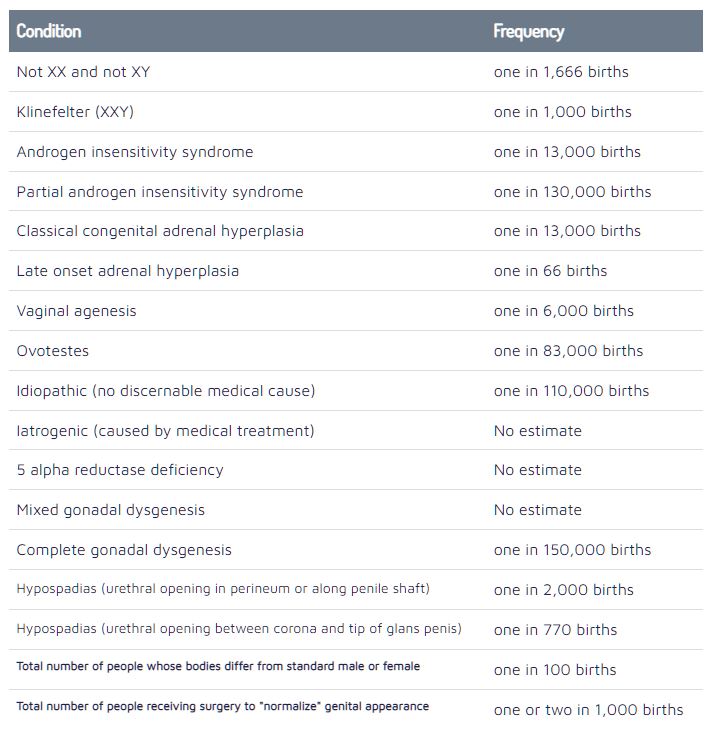
Right there in the middle, we have ‘intersex,’ representing folks whose physical traits might not neatly fit into the traditional male or female categories.

Just a heads-up: Using the word ‘hermaphrodite’ is a no-go. It’s outdated and not the nicest term to use. Oh, and by the way, did you catch the hint of masculinity in the title? 😉
Biological sex revolves around the body parts, hormones, and little genetic codes (chromosomes) we’re born with.
Typically, females have traits like a vagina, ovaries, two X chromosomes, a bit more of a hormone called estrogen, and can nurture and give birth to babies.
Males, on the flip side, usually have testes, a penis, an XY chromosome combo, a dash more of testosterone, and can contribute to making a baby.
Our intersex buddies? They can have a beautiful mix of any of these features.
Imagine someone who, at first glance, looks male but might have a female reproductive system on the inside.
The range of intersex traits is vast and varied!
And if you’re curious about the numbers, the Intersex Society of North America has some eye-opening stats.
Spoiler: one of them might just make you go “What!”
Ready to learn more?
Sexual Orientation: Who You Are Attracted To
Now, let’s talk about sexual orientation.
You might have heard words like ‘heterosexual’ (or being drawn to the opposite gender, aka ‘straight’), ‘homosexual’ (attracted to the same gender, which some might say ‘gay’ or ‘lesbian’), and ‘bisexual’ (connecting with both).
And oh, there’s also ‘asexual,’ where someone might not feel that strong pull of attraction. But that’s a whole other conversation!

At its heart, sexual orientation is about who lights up your heart and soul, who you connect with on many levels.
Like, if you’re a guy and you find women intriguing, you’re straight.
If your heart skips a beat for both guys and girls, you’re bisexual.
And if you’re all about the guys, you’re gay.
Seems easy, right?
Hold on, it gets more interesting.
Did you know Dr. Alfred Kinsey once discovered that many of us don’t fit perfectly into the “straight” or “gay” box?
Instead of just asking, “Who do you like?” (because, where’s the fun in that?), he dived deep into people’s dreams, feelings, and experiences.
He created this cool scale:
0 – Only into the opposite gender
1 – Mostly into the opposite, with a little same-gender attraction
2 – Leaning towards the opposite, but more same-gender attraction than you might think
3 – Loving both genders equally
4 – Leaning towards the same gender, with a bit of opposite-gender attraction
5 – Mostly into the same gender, with a smidge of opposite-gender interest
6 – All about the same gender
Piecing It Together
Now, let’s bring it all back home.
Remember the important bit I said I’d come back to?
Here we go:
Your gender identity, the way you express your gender, your physical body, and who you’re attracted to might seem tangled, but they’re not glued together.
For instance, just because someone identifies a certain way doesn’t mean they’ll express or feel attraction in a set manner. Each part of us is its own beautiful puzzle piece.
Think of a guy born with typical male parts.
He might be raised as a boy, grow up feeling like a man, and present himself in a manly way.
When someone’s body and identity match up like this, we call it ‘cisgender’. This comes with some perks that many might not even notice.
But hey, we should be grateful for every piece of our story.
Pondering All This?
Take a deep breath, especially if these ideas are a bit new.
There’s a world inside these concepts, some of which might seem strange compared to what we were taught.